2010년 10월 24일 일요일

Outside Reading #1: Book review 10.10.10

Book Review
Birth Pang by Jeremy Groopman
October 3rd. 2010.

Jeremy Groopman reviewed “Origins: How the Nine Months Before Birth Shape the Rest of Our Lives” by Annie Murphy Paul on October 3rd, 2010. In this review, he stated that this book shows how to eat and have a healthy lifestyle and that what people eat can influence babies’ health. It seems that he praises Paul for writing this wonderful book.

He introduces his review by telling the readers a story about him and his wife. He said that he had three children and were fortunate enough to have three healthy babies. But he had heard from physicians that those babies could not possibly pass all tests. However, when he learned that his new born baby had high Apgar score, meaning that his baby is in good condition, he and his wife believed that they had succeeded avoiding the danger of pregnancy.


The strength of this piece is imagery; Groopman had chosen the words well. For instance, he uses the sentence “…normal simmering anxieties of pregnancy to a neurotic boil”, thus comparing the increasing anxiety of people to boiling. It shows the vivid imagery to readers. Readers can actually imagine their anxieties being boiled.


One of the weaknesses that I found on this review can be found in the beginning of the review. He used “we”, which is first point of view, showing the informal part. In addition he switches from “you”, the second point of view, into “Younks”, which is a person’s last name and the third point of view. This switching of the point of views left me confusing. Also, he seems to use same words repetitively. For example, he used the word “initially” in her first page, thus not showing the new word to replace the word “initially” At last, he did not end his review good enough. He could have done better by ending his review with open questions or statement. Instead, he chose to put down the effects of the war that had on babies in the Six Day War between Arab and Israeli.

Upon reading this review, I have not found any connections between this and other course material or readings for I did not learn any prose type reading in previous literature classes.

His critical perspective seems to be New Historicism. For example, he compared Paul’s hypothesis to David Barker, who was a British physician in 1989 and stated that “…poor maternal nutrition put offspring at risk for heart disease decades later.” He also wrote down that Paul’s second child was boy, thus showing his interest of author’s background.

Overall, I laud Paul for writing this excellent review.  He uses good diction and various sentence structures. He offers his opinion of the books rather than putting reluctant examples.

Outside Reading #1: Editorial paper 10/10/10

Editorial: 10/10/10
“China emerges as a scapegoat in Campaign Advertisements”By David W. Chen. October 10th. 2010.
http://www.nytimes.com/2010/10/10/us/politics/10outsource.html?hp

In “China emerges as a scapegoat in Campaign Advertisements”, Chen states that Democrats and Republicans are blaming China for America’s economic crisis. He started his first sentence by saying that political parties have found scapegoats: The China. He argues that since the midterm election is coming up, both political parties are using China as a scapegoat to blame the unemployment rates that America currently faces.  Then he lists any examples to support his position.

Most of his examples are direct quotes from people. In one of the examples, he put the quote “China is a really easy scapegoat” said by Erika Franklin Fowler, who is a political science professor at WU (Wesleyan University). He also uses the static data. He uses the data from Pew Poll, saying that “... [Americans] are more and more convinced that China will dominate.”Another example of this is a quote of Joe Steaks, who says that Pat Tommey, a republican rival, “…[is] fighting for jobs-in China.”It seems that political candidates are using China to blame others, thus avoiding the blameless to themselves.

He also uses diction strongly. He decided to put the word “deplorable”instead of unfortunate and use “fraught”instead of stress, thus using more vivid images. Different sentence structures are also used. For instance, he started his first sentence with “with”instead of “Many Americans”. He also does not repeatedly use same words. One of his sentence starts with “In an ad featuring”and other sentence with “…began showing an ad”. He switched the word from featuring to showing, thus avoiding the repetition of words.

This piece’s strengths seem to be various examples, strong diction, and non-repetitive words. One weakness of the piece is Chen’s use of counterexamples. Chen put a quote of Mrs. Boxer, who said that Ms. Fiorina, HewlettPackard’s former chief executive, put many jobs to “Shanghai instead of San Jose, Bangalore instead of Burbank,”and of “proudly stamping her products ‘made in china.’”,   thus countering his example of political parties blaming solely on China. Also, he could have put his own opinions instead of putting various quotes from people. Also, the ending is not quite clear. He ended with Ms.McMahon, a republican, saying that she was not responsible for putting toy manufacturing jobs into China. He could have put something that give everyone something to think about, an universal question, perhaps.

Overall, I think that this paper is good. It has many solid arguments and it flows very well. It is very organized. Thus I made a conclusion that this piece of writing is appropriate for AP essay.

Class note #4: (10/4/10-10/8/10)

In AP English Literature and Composition Exam:  
The multiple choice questions: 45%. 1 hour to work on them. YOU DON’T NEED TO ANSWER EVERY SINGLE QUESTIONS CORRECT IN ORDER TO GET “5” ON AN EXAM.

The free response questions: 55%. 2 hours to work on them.

Multiple choice questions:
Some of the areas that multiple choice questions cover are

  • The main idea
  • The tone
  • Vocabulary (APEnglish exams can also be seen as “Hidden vocabulary test”)
  • The structure
  • To draw inferences from the reading such as the purpose of the author.

Do not take too much time making notes. If you insist, try to stick to abbreviations, symbols, or keywords. Some of the things that you have to notice are: Titles, main ideas, patterns of organization, and significant diction.

Eliminate incorrect answers.

Trust your Guts. Look at picture below to see what i mean.


Notice that you are NOT looking for symbols, figures of speech, allusions, etc. Unless the question directs you to, do not look for them.

How to prepare for AP English Literature and Composition test:
  • Study Vocabulary words
  • Study literary terms
  • Practice answering Multiple Choice questions.
FREE RESPONSE QUESTIONS
They consist of poetry, prose, and requirements of you to choose a work and analyze it in the context of the question asked.

2 close readings consist of poetry and a prose and an open prompt.

About 40 minutes per free response question

You could write free response on two ways: block or point by point.

In block style, you would just write different paragraphs regarding to different matters.

In Point by Point style: Compare and contrast given poems A and B on one matter. Then in another paragraph, compare and contrast another matter) Can be used when some of parts can be easily compared

On close reading sections, you should note: title, narrative stance (point of view, characteristics of the narrator or speaker), significant (reveling of theme, character, tone, or author’s purpose), and patterns of organization.

Look for incongruity or “opposition” as well as congruity. Look for compare and contrast as well as similarity.

On open prompt, there might be questions about “ theme” or “how a given element of literature functions”

Preparation for Free response questions on AP Literature test:
  • Read Hamlet and The Indivisible man and annotate and compare and contrast them.
  • Practice answering Free Response questions.
  • Review terms
  • RTD (Read Think Discuss)
  • Review book notes.

Don’t Stress out! You will do well on the exam!


Allusion:  Reference to something in history or previous literature (Means of suggesting far more than it says)
For example: My dad made my mom ate the red apple in the apple garden. This is biblical allusion to the Genesis; a snake tempted Eve to eat a fruit.
What we’ve done in class:
  • Study Literary terms
  • Critical Wiki test on Monday
  • Wiki ratings due Wednesday. 10.6.10
  • The Indifferent and The Love's Deity" compare and contrast due on Wednesday, 10.13.10

Class note#3: (9/27/10-10/01/10)

Syntax
Definition: The rules that govern how people put sentences

Some techniques to use:
  1. Sentence Construction
  2. Sentence Length
  3. Sentence Variety
  4. Tone

Those can create effects such as emotional

Most common order is Subject Verb object or Subject Verb Complement

Ex: I threw the ball.

Coordinating Conjunction:Conjunctions that connect. Ex:  FANBOYS (For, And, But, Or, Yet, So)

Ex: I was hungry and thirsty.

Subordinating conjunction:One is dominant and other s not. It joins the thought
(Dependent clauses)  Some of the Subordinating conjunction: after, before, although

Ex: I went to McDonalds although I was not hungry.


http://grammar.ccc.commnet.edu/grammar/conjunctions.htmis a great website that shows examples of Coordinating Conjunction and Subordinating Conjunction.

Compound sentence:Two independent clauses with a coordinator

Ex: I wanted to go to Pizza Hut, but my friends wanted to go to Burger King.


Complex Sentence:An independent clause joined by one or more dependent clauses
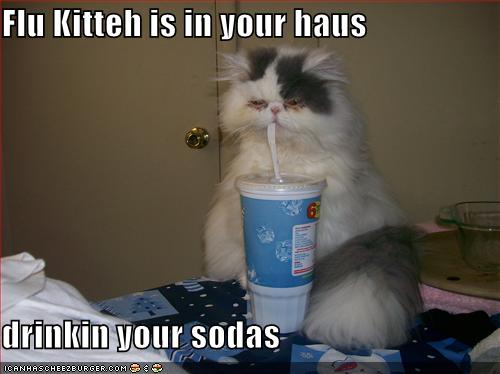
Ex: The cat was drinking soda because it was very thirsty.
The picture below shows the thirsty cat.


Simple sentence: Sentence with an independent clause.

Ex: I ate the fried chicken.


Short sentences show more actions and ideas than longer sentences.

Ex: He shot his friend on the chest shows more actions than “Jake, who decided to shoot his friend, pulled the trigger.”

Present tense shows more actions and ideas than past tense.

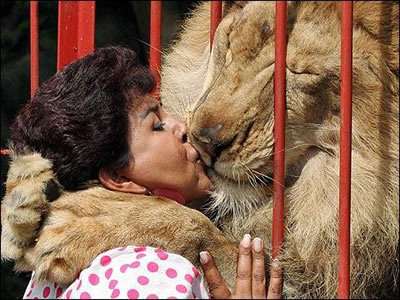
Ex: I want to kiss you since it will feel like kissing hot chocolate conveys more action and idea than the sentence “I kissed you”

The picture below shows the gorgeous kissing scene.


Sentence fragments are used to create various effects such as lyrical and cumulative.

Ex: I hate you. I hate you. I hate you. That is why I want to shoot you. Run away. Run away.

Ing forms can make sentence active and forceful

Ex: Wanting to eat the squirrel, Drake attempted to catch it.

The passive voice is used to create impersonal tone, not clear responsibility, and delay part of information to create suspense.

Ex: Drake had been eaten, and no one knew who ate him.

Conjunctions are used to create smooth rhythm and sentence openers.

Ex: The monster did not eat Drake, but it claimed that he had eaten Drake.

Verbal can be used to open a sentence, to create suspense.

Ex: Grabbing the m-1M with swift motion, the solider open fired.


Interrogatives can be also used to create suspense.

Ex: The solider did not open fire at civilians for nothing, didn’t he?

Punctuations can be used to create a desired effect

Ex: He threw a piece of cheese at little girl!

Clarity
Definition: Be clear in your thoughts and words.

Say what you mean.

The picture bellows shows unclarity


Is the picture above trying to show that a child and a mother cannot cross the street? Or is it showing that a parent cannot hold a child’s hand?

Use active voice instead of passive voice

Ex: I drank the milk.

Use a single point of view

Ex: She drank the milk rather than “She drank the milk while I was sipping coke.”

Break long sentences into the easier to understand pieces.

Ex: People need to help build economy by working on jobs are better than “To establish stable economy, people need to work harder on their jobs even if they need work on weekend”

The Plain Style
You should use short verbs, short words, active verbs, and simple sentences

Ex: I ate the bread is clearer than “I, driven by hungriness, ate the bread.”

.It is good to avoid the official style

Official style:A dominance of nouns and an atrophy of verbs.  Especially used by bureaucracies ex: law

The Concision
Do not be wordy. Eliminate all the unnecessary words

Ex: In the drama series Office by BBC, Michael, the manager of the company, had to fire one employee to follow his boss’s order. -> Mark had to fire an employee

Rhetoric
My note for week 2 shows the definition and examples of rhetoric well.

http://www.apelit-okemos.spruz.com/pt/Jaeyong-Cho--92010--92410-/blog.htm


http://ec.europa.eu/translation/writing/clear_writing/how_to_write_clearly_en.pdfshows how to write clearly.
What we did in class?
We worked on syntax. diction, and imagery worksheets. We also read The Nuts and Bolts of College Writing.


Works cited

http://grammar.ccc.commnet.edu/grammar/conjunctions.htm: a website that shows conjunctions

http://www.dvorak.org/blog/wp-content/uploads/2009/11/funny-pictures-sick-cat-drinks-soda.jpg  A picture of a cat
http://www.goodexperience.com/broken/images/paris_sign.jpg : A picture with unclear sign

http://cellar.org/2006/LionKiss.jpg: A picture of lion kissing a woman

http://ec.europa.eu/translation/writing/clear_writing/how_to_write_clearly_en.pdf: A website that demonstrates how to write clearly

Nuts and Bolts of College Writing: definitions and examples of clarity, plain style, rhetoric, and concision.

The syntax note that Mrs. Holmes gave to us

Class note #2: (9/20/10-9/24/10)

You don’t have to memorize everything single literary potential structures. Study AP exam literary terms by clicking Quizlet on Spruz site, looking at Vocabulary words.

Perrine’s Literature:

Barbie doll by Marge Piercy: Feminism, women had to marry in order to the happy but marriage means dying. Can have more than one meaning.
The picture below is a picture of a barbie doll.
.Barbie doll

Sorting  Laundry by Elisavietta Ritchie: A woman missing her husband; has more positive attitude toward marriage.

Figure of speech; Anyway of saying something other than the ordinary way.

Similar and Metaphor are both used as a means of comparing things are essentially like.

Similar: The comparison is expressed by the use of some word or phrase, such as like, as, than, similar to, resembles, or seems. Ex: Barrack Obama said “They talked about me like a dog”during the Labor Day rally on 2010.

Metaphor: The comparison is not expressed but is created when a figurative term is substituted for or identified with the literal term. Ex: I am the thunder

http://www.newton.k12.ks.us/sch/w/start/metaphors_similes.htm shows some great examples of similar and metaphor.

Personifications: Giving the attributes of a human being to an animal an object or a concept. (Subtype of Metaphor)
The video below is an example of personification


Synecdoche: The use of the part for the whole.

Metronymic: The use of something closely related for the thing actually meant

Symbol: Something that means morethan what it is

Allegory: Narrative or description that has a second meaning beneath the surface. Dimmesdale, one of the main characters of the Scarlet Letter by Nathaniel Hawthorne, stands for all of the people who do not confess their sins. He suffered because he did not confess his sins to townspeople.

Paradox: Apparent contradiction that is nevertheless somehow true
http://www.examplesof.com/paradox.html shows some examples of paradox.

Overstatement (Hyperbole): Simply exaggeration, but exaggeration in the service of truth. Ex: Brittney, one of my friends, said that she was going to die because the orange chickens in Panda Express tasted so bad.

Understatement: Saying less than one means. Ex: When I ate a big piece of cheese berry cake last month, I said that it was a very tiny crumb.

Irony: Meanings that extend beyond its use merely as a figure of speech. It is neither mean nor kind. It is simply a devise.
The picture below is an example of irony
 peace team attacking the crowd
Verbal Irony: Saying the opposite of what one means. Ex: When I learned that my girlfriend cheated on me, I called her on the phone and said “You are an honest girl.”

Dramatic Irony: Discrepancy is not between what the speaker says and what the speaker means but between what the speaker says and what the poem means.

Irony of situation: Discrepancy exists between the actual circumstances and those that would seem appropriate or between what one anticipates and what actually comes to pass. Ex: In the Scarlett Letter by Nathaniel Hawthorne, Dimmesdale, one of the main characters, declared to the people that he was a sinner. He expected townspeople to hate him but they respected him instead.

You can test your knowledge of these three ironies by taking a quiz at http://www.proprofs.com/quiz-school/story.php?title=different-types-irony

Satire: More formal term, usually appropriate to written literature rather than to speech and ordinarily implying; it is ridicule (either bitter or gentle) of human folly or vice, with the purpose of bringing about reform or at least of keeping other people from falling into similar folly or vice.
The picture below is an example of satire

 An image making fun of UN soliders


Rhetoric
Rhetoric= Art of Communication.

The Rhetorical situation= Context for art of communication= situation in which the communication takes place and a smart essayist, etc who needs to communicate something will always try to analyze the rhetorical situation before beginning to compose a message. This analysis will lead to a plan.

Elements of Rhoetoric:
Subject: What is your topic?

Purpose: What do you want to get out of this? Why are you engaged in this communication? (Persuade, inform, etc.)

Audience: Who exactly, do you imagine will receive this communication?

Speaker: What kind of a person do you want to seem like as you send this message?

Argument
Argument: One way to accomplish the goal of persuasion.

Persuasion: Purpose for communication.

Argument is a technique we can use to accomplish the purpose of communication.

Three types of Arguments:

Ethos(Ehtics):Appeals to our morality, our sense of right and wrong.
The picture below is an example of Ethos
 is this right?

Logos (Logic):Logical arguments are constructed according to certain rules and appeal to our intellect.
Emotional (Pathos):Appeals to feelings (Love, hate, etc.)

Thesis:One main point.

Claim:An assertion (an idea that is not a simple fact) Should be used to support your thesis.
Warrant:Explanation of your reasoning that shows what your evidence means
Evidence:Facts that show that your claims are reasonable.

Necessary:Something that can’t be ignored.

Sufficient:“Enough” when the condition of sufficiency is met. You have done enough to make your case.

Few types of Arguments:
Proposal argument
Cause & effect argument
Argument of evaluation
Argument of fact
Argument of definition

 Works Cited 

:
http://www.newton.k12.ks.us/sch/w/start/metaphors_similes.htm= a site that shows example of simile and metaphor


http://www.youtube.com/watchv=m56F4EKN9hg&feature=related= Personification video

Petri, Alexandra. “Why don’t we talk Barack Obama ‘like a dog’” The Washington posts. N.p., 7 Sep. 2010. Web. 20 Sep. 2010.= an example of simile

http://platform.blogs.com/photos/uncategorized/atlasthelparrives.jpg= a picture of UN soliders.

http://www.dailyhaha.com/_pics/peace_irony.jpg= a picture that shows the yellow-shirt guy attacking the crowd

http://www.examplesof.com/paradox.html= a site with paradox examples

Class note #1: (9/13/10-9/17/10)

We went to the lab on 9/13/10 to work on the Wiki and close reading section
(9/14/10-9/17/10) 

Poetry:Language condensed to artistic effect. People have used it for centuries for universal language. It takes more time to explain it than read it. It is the most difficult yet rewarding literature of all times.

If people take more time read something than to explain it, it is a prose.

Example of poem:I, too, sing America.
It takes more time to explain it than to read it
The poem itself: http://www.poets.org/viewmedia.php/prmMID/15615

Example of prose: Too kill a mocking bird by Harper Lee. It takes longer to read it than to explain what it means.

There is no correct answer in the Literature! There is no more guided tour anymore. Now we are in the wilderness, looking for the answers.

We analyzed the poem “Hidden meaning” by Dabney Stuart by doing the activity called Fish bowl. We saw molestation, autoerotism, and castration in the poem. In the end, we figure out that Stuart is criticizing roles of men and women in fairy tales. Men have to work hard and defeat huge monsters while women have to do wait for the prince charming.

Perrine’s Literature, Ch.2: Questions that you should ask while reading the poem:
  1. Who is the speaker?
  2. What is the setting in place?
  3. What is the central purpose of the poem?
  4. What is the occasion?

http://www.shmoop.com/poetry/how-to-read-poem/how-to-read.html is the great website to learn more about reading poetry.

Diction: Words choice that some authors use to create feelings of their works.
 Denotation:Dictionary meaning or meanings of the word.
 Connotation:Things that suggest beyond what it expresses.
 For example, let’s use the word “thin”
       Gaunt     Skinny                  Thin           Slender             Svelte
<------------------------------------------0------------------------------------------->

   Pejorative or negative feeling towards the Gaunt
Ex: http://farm1.static.flickr.com/84/250159223_4c0f005be4.jpg

Honorific or positive feelings towards the Svelte
Ex: http://www.rottentoons.com/images/cartoon-tutorial.jpg

Concreteness versus Abstraction.

Authors can use specific or vague words, depend on situations.
Ex: Clothes -> Pants -> jeans -> Levis
Too much abstraction is not good.

Let’s use the phrase “Girl danced as if she was caught on the fire” as an example
If we say girl’s clothes caught on the fire, it would be no longer funny. If we put jeans of clothes, it would get more specific. If we substitute jeans instead of clothes, we can create an image of girl’s jean caught on fire. However, if we put Levis, it would no longer be serious. Instead, it would be funny.

Precision:How specific should be the word be? “Good” or “Nice” contain no specific concept. It can be vague.
Ex: If I were to solve math problem correctly, my math teacher would say “Good job!” instead of “It’s about time! You’ve been calling out the wrong answers for weeks now.”

Elevation Versus Colloquialism: Different people have different meanings and levels for this. Let’s use slang and epic diction for example
Slang <---------------------------------------------------------> Epic Diction
 Colloquialism language (ex: What’s up, dawg)            Elevated language (ex: How are you doing, sir? )

Epic diction is used in important speeches such as Novel Prize speech or inaugural speech.
Slang is everyday use words.

Dialect, Jargon, Regionalism, etc.
Dialect:Language said by people in broad areas. Ex: In Southern areas, people say “y’all” instead of you all.

Regionalism:Words said by people in specific regions. Ex: When I moved to Tallahassee, Florida, the phrase “ain’t” was used. It is a shorten version of don’t. When I said “I ain’t have pencils. Can I borrow one? ” to a girl when I went to Oregon, she had no idea what I just said.

Jargon:Specialized language of profession. Ex: military’s jargon and cooker’s jargon are different.
             Imagery: Representation though language of sense experience.
Types of Imagery: 1) Visual imagery (vision, image) 2) Auditory imagery (sound) 3) Olfactory imagery (smell) 4) Gustatory imagery (taste) 5) Tactile imagery (heat and cold) 6) Organic energy (internal sensation such as hunger) 7) Kinesthetic imagery (Movement or tension in the muscles or joints)

http://www.buzzle.com/articles/imagery-examples.html shows some great examples of imagery.

Homework:Read and analysis “Kitchenette building” poem. Worked on finding imagery and diction with a partner. Comment on one aspect of both “The widow’s lament” and “The naming of parts”.